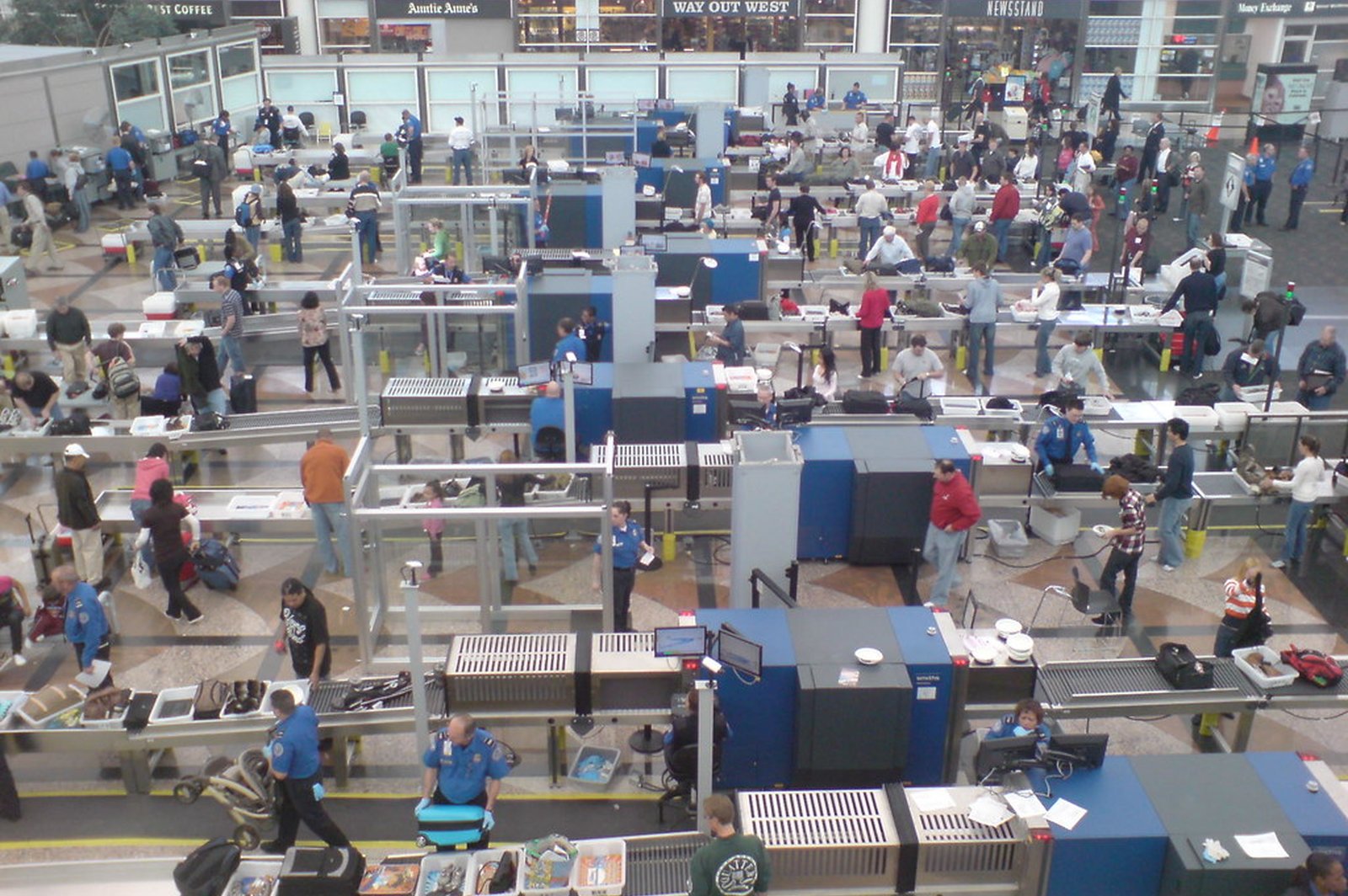
Going about daily life in America right now—boarding a subway, walking through an airport, passing a landmark—you can't miss it. More armed officers everywhere, more bag checks, more uniformed personnel standing watch. Security operations at a scale not really seen since the years right after September 11th.
The Department of Homeland Security issued a National Terrorism Advisory System (NTAS) Bulletin on March 9th, warning of "a heightened threat environment driven by foreign adversary activities and potential for Iran-linked or Iran-inspired attacks on U.S. soil." It doesn't point to a specific, confirmed plot, but it signals that intelligence agencies are tracking increased threat activity—including possible lone actors or sleeper cells energized by the conflict.
The changes are already visible on the ground. At major international airports—JFK, LAX, O'Hare, Miami International—TSA checkpoints have been reinforced with Customs and Border Protection agents and, at select locations, National Guard personnel. Random secondary screening rates are up. The Port of LA and Port of Long Beach, which together handle about 40% of U.S. seaborne imports, are running enhanced cargo scanning and personnel screening that's adding 10–15% to processing times—stacking directly on top of the supply chain strain already building from the Hormuz disruption.
In New York City, the NYPD's Critical Response Command has heavy-weapons teams stationed at Times Square, Grand Central Terminal, the Brooklyn Bridge, and the financial district. MTA riders in major stations have encountered more random bag inspections—a program that had been quietly scaled back in recent years and is now back. Similar measures are active in D.C., Chicago, Los Angeles, and Houston.
None of this is cheap. Port delays mean higher costs for importers. Airport delays mean missed connections and rebooking fees. Major event venues near D.C. and New York are reporting cancellations as organizations opt for lower-profile locations.
The harder question is how long any of this lasts. The post-9/11 era showed that elevated security postures, once in place, are nearly impossible to walk back politically—even long after the immediate threat fades. The TSA was created as a temporary emergency measure and is now a permanent $8 billion-per-year institution. Whatever security infrastructure gets built during the Iran conflict may end up being with us for a very long time.